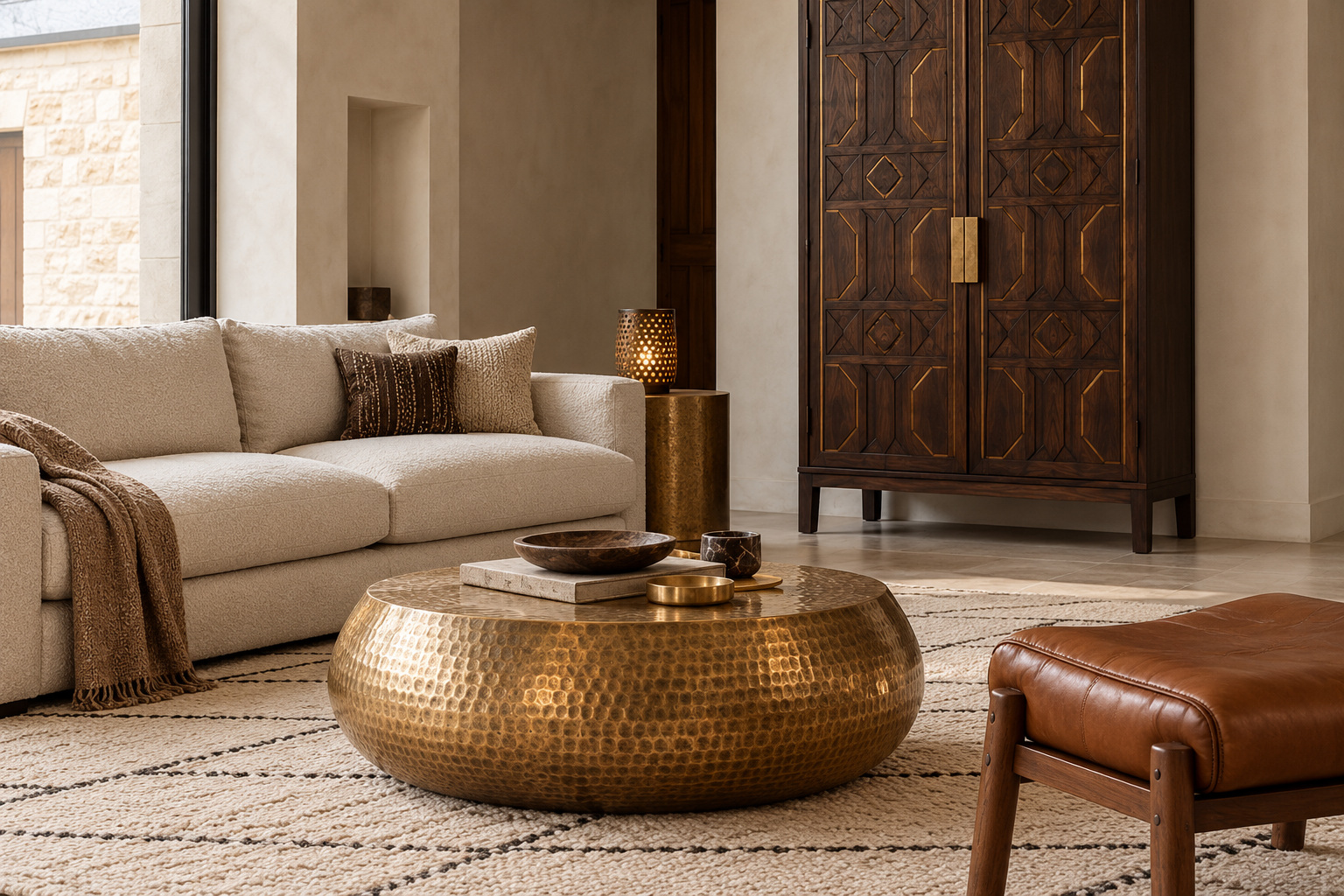
HOMEOCTOS inspiration, with a selection of pieces to recreate the atmosphere.
Contemporary interiors are rediscovering the beauty of objects that reveal how they were made. Carved wood, hammered metal, tactile textiles and richly textured surfaces are bringing individuality back into the home, offering an alternative to rooms defined by perfectly coordinated furniture and uniform finishes.
This renewed appreciation for craftsmanship is becoming increasingly visible in European interior design. At Maison&Objet in September 2026, the In Materia exhibition explored the expressive potential of materials, traditional techniques and the relationship between texture and contemporary design.
Looking towards 2027, this direction offers a more personal interpretation of luxury, one defined by the character of individual objects, the quality of their finishes and the way different materials interact.
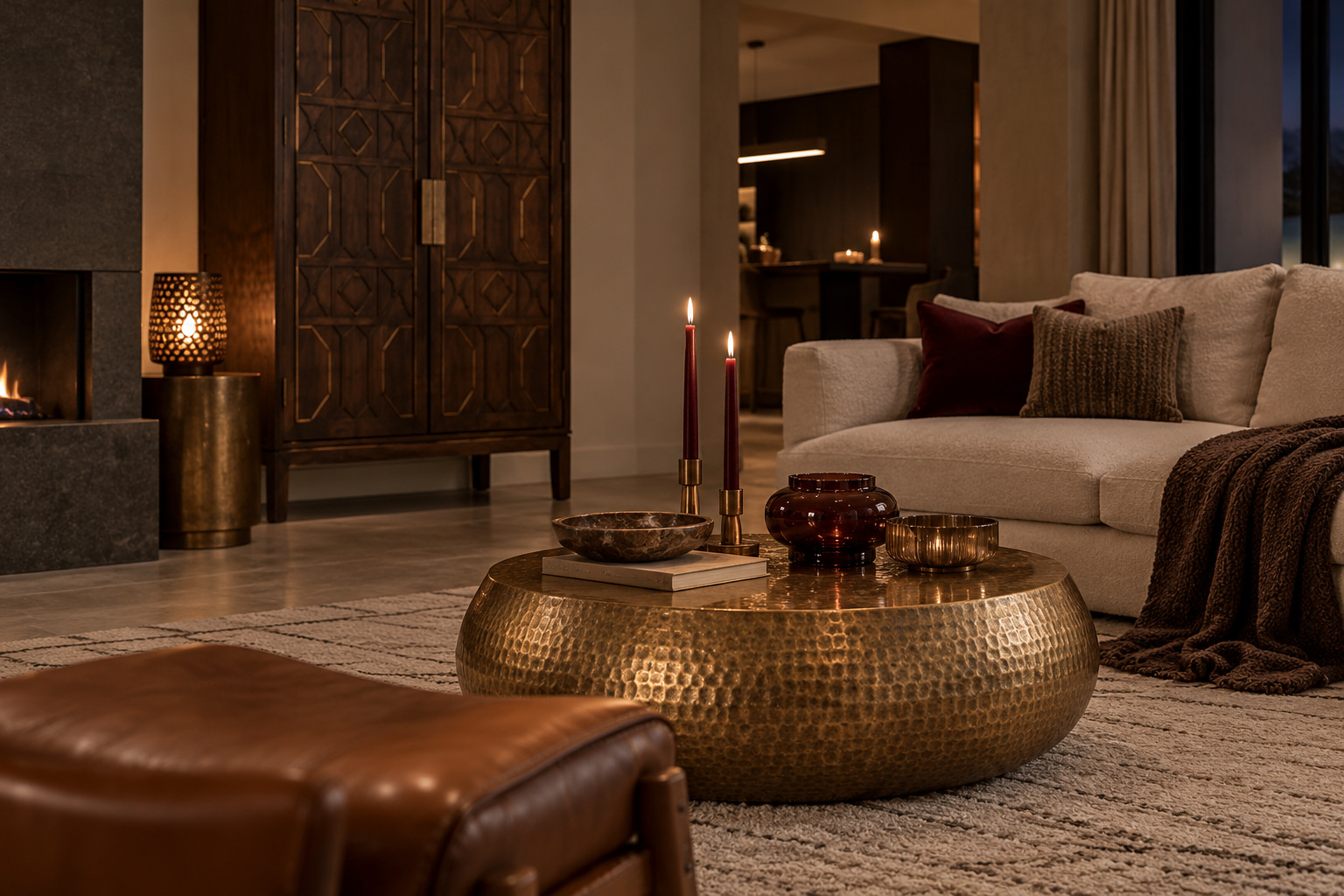
The HOMEOCTOS Crafted Living showroom captures this approach through a carefully balanced composition. A generous ecru sofa introduces softness and visual calm, while a carved dark-wood cabinet provides architectural presence. A rounded golden table adds a sculptural contrast, complemented by caramel leather and natural wool.
The palette is deliberately restrained, allowing the materials to become the defining elements of the room.
Explore the selected pieces through the interactive image and discover how their individual characteristics contribute to the overall atmosphere.
The editorial imagery illustrates the design concept. Linked products are selected for their compatibility with the style, and their exact characteristics can be found in the individual product sheets.
01. Give One Piece the Leading Role
A memorable interior rarely depends on every object attracting equal attention. More often, its character begins with a single distinctive piece, supported by furniture that allows its craftsmanship and proportions to stand out.
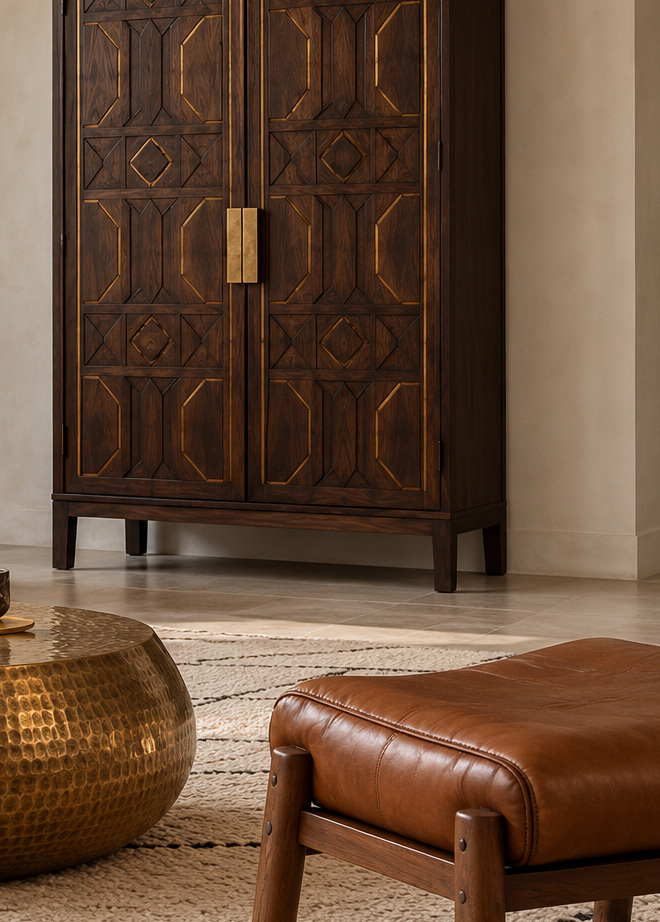
In Crafted Living, the carved wooden cabinet establishes that visual hierarchy.
Its dark finish, decorative relief and architectural proportions contrast with the simplicity of the surrounding upholstery. The result is a composition where traditional workmanship feels entirely compatible with contemporary furniture.
This relationship between expressive and understated forms is central to the renewed interest in crafted interiors.
The Arian cabinet represents this approach through its richly worked wooden surfaces. Its decorative character makes it suitable as a focal point, particularly when positioned against a quieter background.
Rather than surrounding a statement cabinet with equally elaborate furniture, introduce simpler silhouettes and lighter finishes. An ivory sofa, an understated rug and a low table can provide the necessary contrast.
Proportion also matters. A visually substantial cabinet benefits from clear space around it, not only for practical access but also to allow its craftsmanship to be appreciated.
In a smaller living room, the same principle can be achieved with a single distinctive furniture piece instead of several decorative accents competing for attention.
The objective is to create visual balance, allowing character to emerge naturally from the relationship between objects.
02. Let the Wood Keep Its Character
Wood has long been central to European furniture-making, but its role in contemporary interiors continues to evolve.
While recent minimalist aesthetics often favoured pale, smooth finishes, the renewed interest in craftsmanship is bringing darker tones, visible grain and decorative relief back into focus.
Looking towards 2027, worked wood offers a way to introduce depth and individuality without abandoning contemporary simplicity.
The appeal lies in its variations. Grain patterns, carved details and changes in tone interact with daylight, giving wooden surfaces a visual complexity that uniform finishes cannot always reproduce.
In the Crafted Living composition, the cabinet's decorative surface becomes an architectural feature in its own right.
Its darker colour creates a grounded contrast against the pale walls and upholstery, while its relief adds depth without requiring additional decorative objects.
A particularly interesting approach is to combine worked wood with a material that reflects light differently.
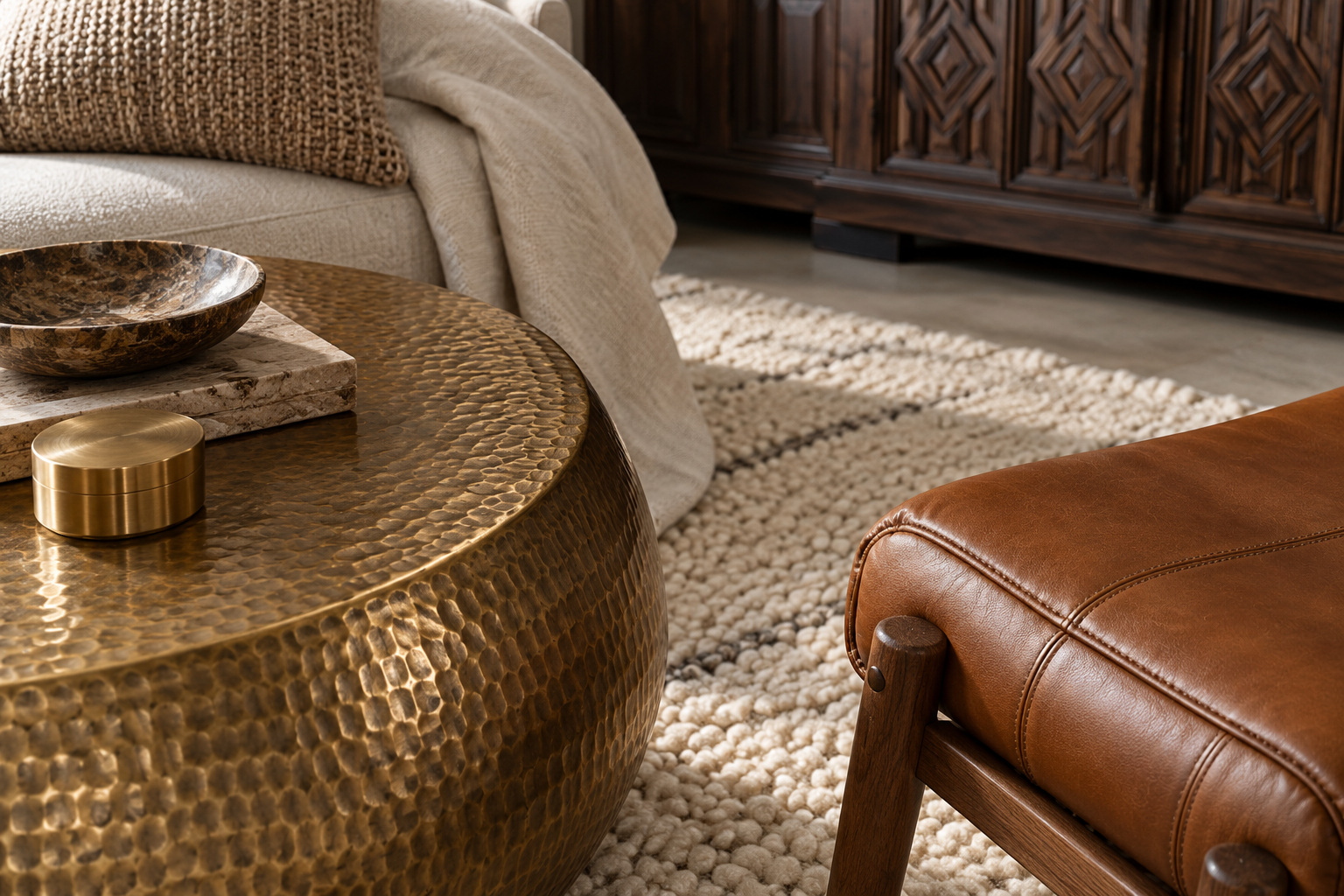
The Safaga coffee table introduces this contrast through its rounded form and hammered golden finish.
Unlike a perfectly polished metallic surface, hammered metal breaks reflections into smaller variations of light and shadow. This gives the table a tactile quality and allows its appearance to shift subtly throughout the day.
The juxtaposition of carved wood and worked metal creates an engaging material dialogue. One brings depth and structure, while the other introduces warmth, reflection and a softer silhouette.
Both materials have expressive surfaces, yet their contrasting proportions allow them to coexist without overwhelming the composition.
This is one of the defining qualities of Crafted Living: materials with individual identities brought together through thoughtful design.
03. Connect the Seating Through Texture
Select a glowing point to explore a compatible piece.
 Style suggestion: Side table Hanane · set of 2Style suggestion: Helun wool and viscose rug with a brown graphic, 160 × 230 cm
Select a glowing point to explore a compatible piece.
A sophisticated interior does not necessarily require an extensive colour palette.
In many cases, variations in texture can create a richer atmosphere than additional colours or decorative patterns.
Crafted Living brings together several complementary surfaces: smooth leather, woven upholstery, wool, carved wood and textured metal.
Each responds differently to light and touch, giving the room visual depth while preserving an overall sense of calm.
Natural wool plays an important role in this composition.
The Beni Ouarain BN2210 rug introduces a soft, textured foundation that helps connect the seating elements. Its surface contrasts with the harder finishes of the surrounding furniture, creating a comfortable transition between the floor and the main seating area.
Rug proportions can significantly influence the appearance of a living room. A larger rug that accommodates the front legs of the principal seating often creates a more unified composition than a small rug positioned independently beneath the coffee table.
In compact interiors, the objective is to establish a clearly defined seating area while maintaining comfortable circulation.
Leather introduces another dimension to the material palette.
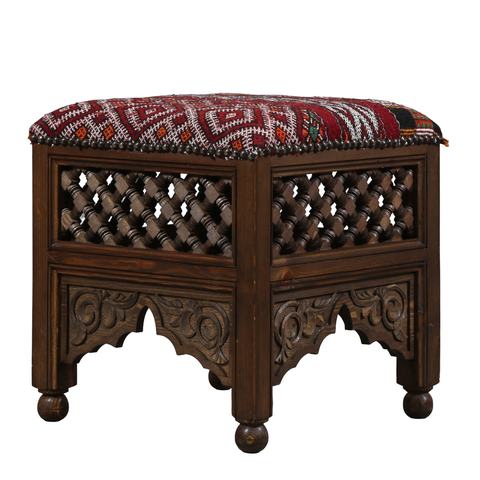
The Sadia stool in caramel offers a warmer, smoother surface beside the woven upholstery and wool. Its compact form can provide an additional seat or decorative accent without the visual weight of another large armchair.
Caramel also creates a subtle chromatic connection between the ivory sofa, dark wood and golden metal.
These relationships make the room feel naturally coordinated, even though the materials have different textures and origins.
The strength of this approach is its versatility. A limited number of carefully selected surfaces can create a layered, comfortable interior without the need for excessive accessories.
04. Use Colour as a Small, Deliberate Change
The Crafted Living palette relies on a combination of ivory, dark wood, caramel and aged gold.
Together, these tones create a warm foundation that can accommodate seasonal changes and evolving decorative preferences.
For 2027, deeper accent colours offer a particularly interesting way to develop this aesthetic.
Burgundy, oxblood and muted blue can introduce personality to neutral interiors without changing their principal furniture.
Burgundy is especially effective alongside dark wood and caramel leather. Its warm undertones strengthen the relationship between these materials, while pale upholstery provides the contrast needed to maintain an open, balanced appearance.
The Ovelin cushion cover in burgundy and ecru introduces this colour direction through velvet.
Its soft surface adds another tactile layer, while the combination of burgundy and ivory connects it naturally to the existing palette.
A single expressive cushion can be sufficient to change the mood of a neutral sofa, particularly when the surrounding textiles remain understated.
For a quieter interpretation, the same composition can be maintained without additional colour. Variations in wool, leather, carved wood and metal already provide considerable visual richness.
The most successful use of accent colour is often deliberate rather than extensive.
Repeating a chosen tone in one or two carefully positioned details can establish continuity while preserving the individuality of the principal furniture.
05. Let the Atmosphere Evolve Through the Day
The character of a room is influenced not only by its furniture but also by the way natural and artificial light interact with its materials.
During daylight hours, the Crafted Living composition reveals its contrasts through the grain of wood, the softness of upholstery and the irregular reflections of hammered metal.
As daylight fades, these same surfaces can take on a different appearance.
Directional lighting draws attention to decorative reliefs, while softer pools of light create a more intimate atmosphere around the seating.
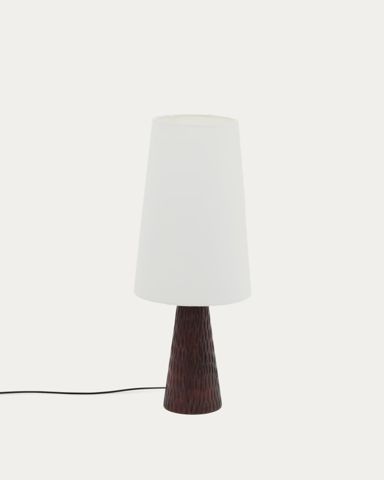
A table lamp positioned near the carved cabinet can emphasise the depth of its surface. A separate, warmer light beside the sofa provides comfortable illumination for reading or conversation.
This layered approach is particularly relevant during autumn and winter, when interior lighting becomes an important part of everyday comfort.
The material palette also adapts naturally to the colder months.
Wool, leather, velvet and darker wood tones create a sense of warmth, while small seasonal changes can refresh the atmosphere without altering its foundations.
A textured throw, a burgundy cushion or a sculptural decorative object may be all that is needed to introduce a different mood.
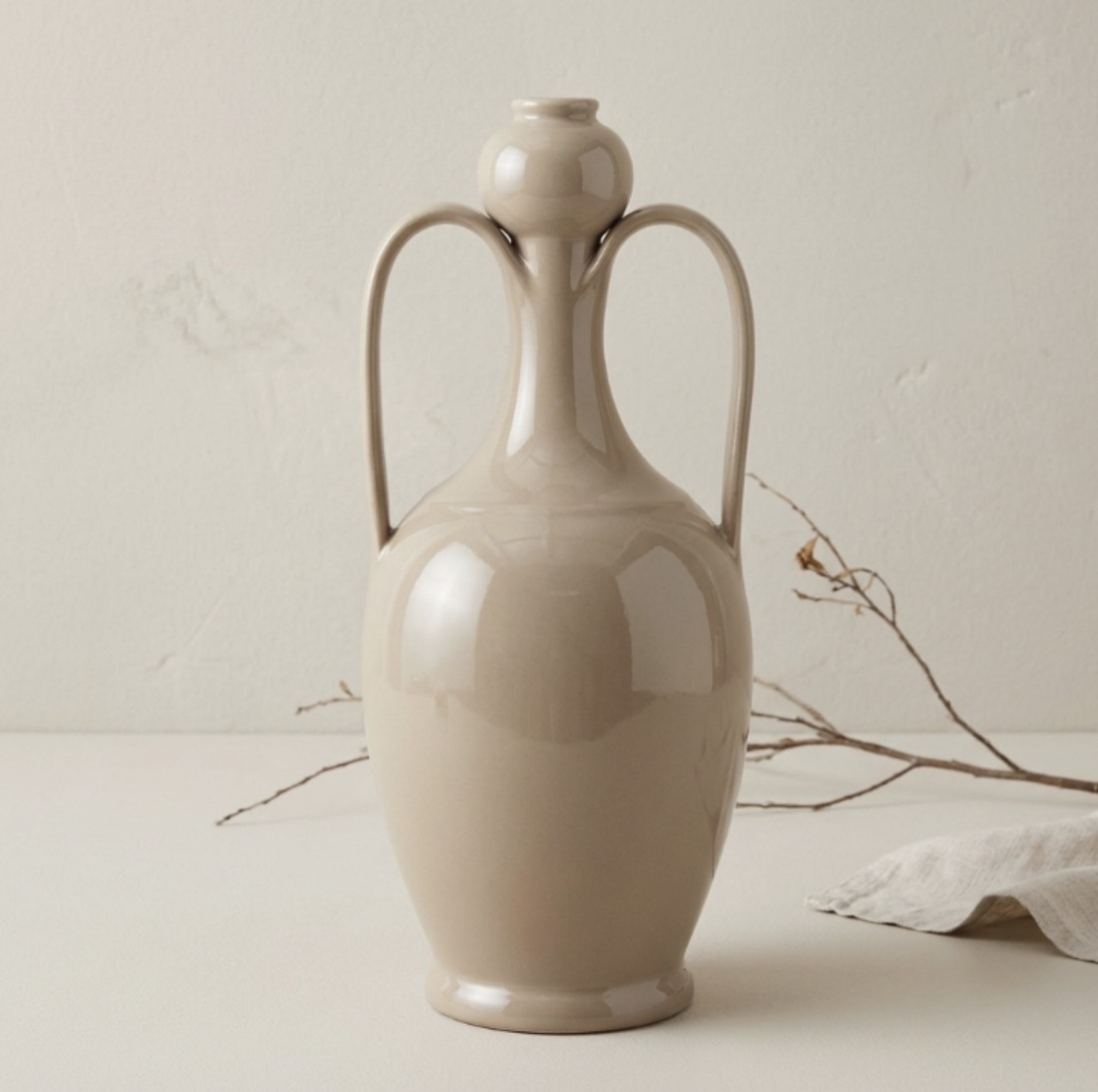
The same restrained approach can extend into the festive season. A few metallic accents, softly illuminated glass objects and carefully arranged candles can complement the room's existing materials without overwhelming them.
Rather than treating seasonal decoration as an entirely separate visual language, Crafted Living encourages continuity between the architecture of the room, its furniture and the smaller details introduced throughout the year.
The result is a living space that remains coherent while adapting to different moments and occasions.
The Value of Character
Crafted Living reflects a wider movement towards interiors that feel increasingly individual, tactile and thoughtfully composed.
The appeal of craftsmanship lies not simply in decorative detail, but in the ability of materials and objects to contribute something distinctive to a space.
A carved cabinet can introduce architectural depth. A hammered-metal table can add movement and reflection. A beautifully textured rug can connect the furniture while creating comfort beneath it.
Together, these elements demonstrate how traditional workmanship and contemporary design can establish a balanced, personal interior.
The emerging direction for 2027 encourages a more considered approach to furnishing, where individuality, comfort and visual longevity become as important as the latest colour or decorative trend.
A room with character is not defined by the number of objects it contains, but by the relationship between the pieces that belong there.
Discover the Crafted Living showroom and explore the selected furniture and decorative pieces at HOMEOCTOS.
SPACES WITH CHARACTER.
Three more pieces
Compatible alternatives selected for their function, shape, colour and texture. See each product sheet for its exact materials and dimensions.